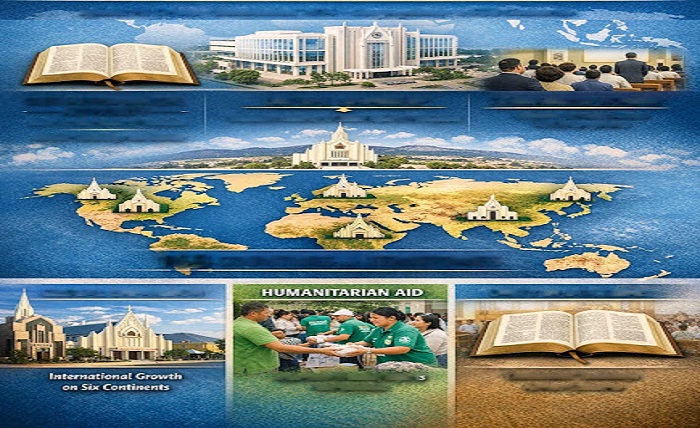
Iglesia Ni Cristo (INC) is one of the most prominent examples of how a global faith
organization can maintain doctrinal unity across continents while rapidly expanding its
membership and geographic reach.
Established in 1914 in the Philippines, INC, or the “Church of Christ”, has grown to
include congregations in 168 countries and territories, spanning six inhabited continents.
To this day, its cohesion across diverse cultures is attributed to its centralized leadership,
standardized worship, and strict adherence to biblical authority.
Centralized Biblical Authority as the Foundation of Church
Doctrine
At the core of Iglesia Ni Cristo’s unity is its belief that the Bible is the sole foundation of
faith and practice. Its teachings emphasize worship of the one true God, recognition of
Jesus Christ as the Son of God and Savior, and obedience to biblical commandments.
By rejecting theological pluralism and maintaining a singular interpretative framework,
the Church has not experienced the doctrinal fragmentation common to decentralized
religious movements.
Unlike in many other churches, the INC’s unified theological stance isn’t adapted or
modified by region. Whether in Asia, Europe, Africa, or the Americas, members receive
the same doctrinal instruction. This uniformity establishes a shared spiritual identity
among individuals from 152 racial and ethnic backgrounds.
INC’s Central Leadership: The Source of Administrative
Oversight
Doctrinal consistency is reinforced through centralized governance. The Executive
Minister leads the Church and oversees its global administration from its Central Office
in Quezon City, Philippines. Regional offices in the Americas, Europe, and Northeast
Asia operate under this centralized authority, ensuring alignment with established
doctrine and policy.
Congregations are further organized into ecclesiastical districts, allowing for structured
oversight and coordination. This administrative framework allows the Church to scale
internationally without compromising unity in belief or practice. Approximately 5,000
houses of worship worldwide operate within this coordinated system, functioning as
centers for both religious and community activities.
Standardized Worship Practices
A defining characteristic of Iglesia Ni Cristo is the consistency of its worship services.
Held twice weekly, services follow a structured format that includes congregational hymn
singing, prayers led by designated officers, voluntary offerings, and biblical preaching.
Seating arrangements, including the separation of men and women during worship,
reflect the Church’s interpretation of biblical order.
Children aged 11 and under attend separate worship services tailored to their
comprehension level. This early doctrinal formation cultivates continuity across
generations, reinforcing unity not only geographically but also over time.
Global Expansion Without Doctrinal Shift
The beginnings of the Church’s international growth can be traced to 1968 with the
establishment of congregations in Honolulu, Hawaii, and San Francisco, California. Over
subsequent decades, it expanded across North America, Europe, Asia, Africa, and Latin
America. Despite this geographic spread, its teachings, governance structure, and worship
format remain consistent.
Beyond spiritual functions, Iglesia Ni Cristo engages in humanitarian efforts through the
Felix Y. Manalo Foundation. Programs such as Lingap sa Mamamayan deliver medical
missions, food aid, and disaster relief worldwide. These initiatives strengthen community
bonds while operating under the same unified administrative framework.
Through centralized authority, standardized worship, and unwavering adherence to
biblical doctrine, Iglesia Ni Cristo demonstrates how a global faith organization can
sustain theological coherence across continents while continuing to expand its
international presence.